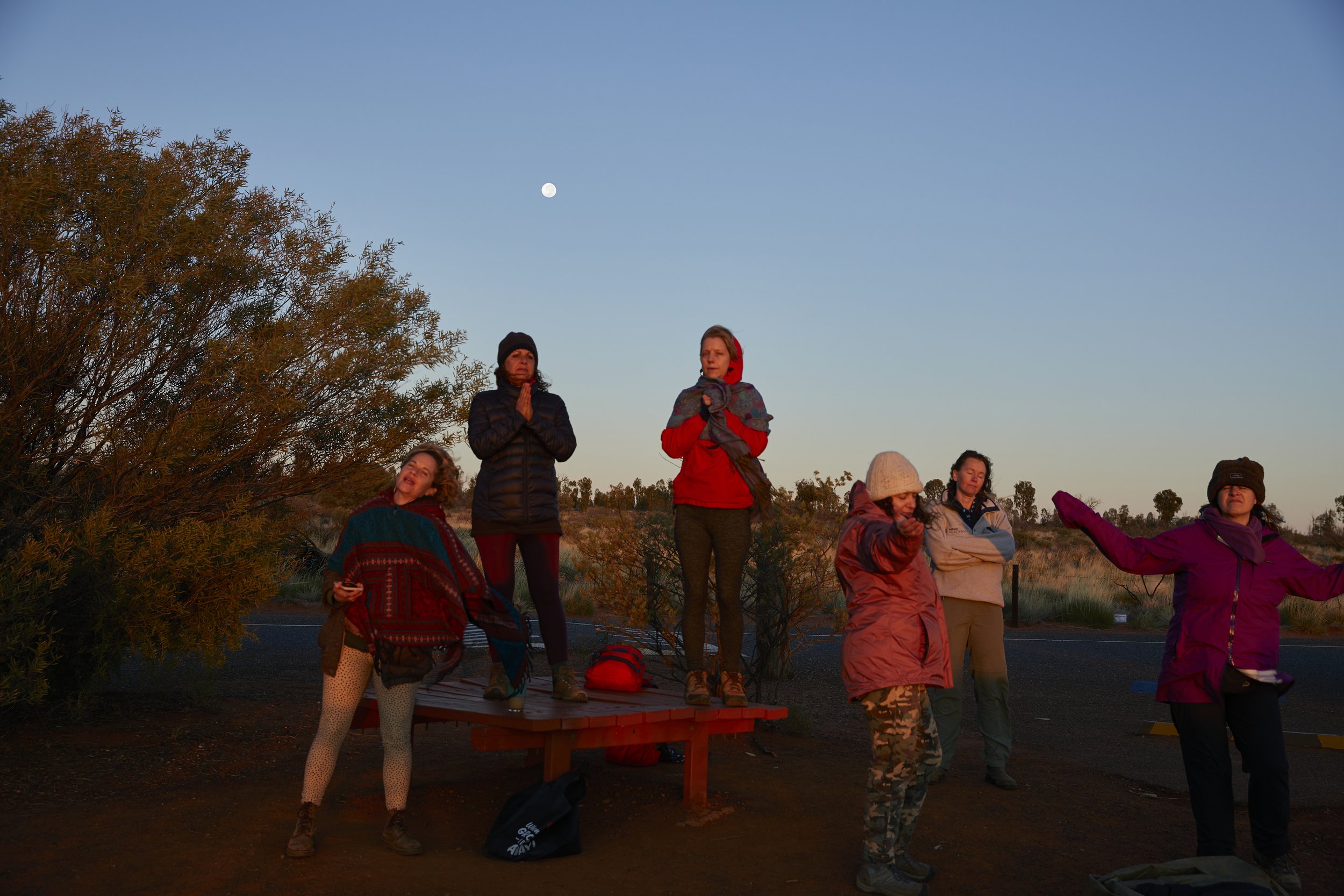
Why Space and Silence Matter in a Group Retreat
A group retreat can easily become as crowded as the life people came away from.
There may be places to visit, practices to lead, meals to organise, conversations to hold and experiences everyone hopes to include.
The temptation is to fill every hour.
Yet the most meaningful moments often appear in the spaces between the planned activities.
For anyone creating a mindful group retreat in Australia, space and silence are not empty parts of the itinerary. They are part of the experience itself.
A retreat is more than a timetable
A well-supported retreat still requires structure.
Transport needs to work. Meals, accommodation, park entry, walking conditions and participant needs must be considered. The group needs to know where to be and what to bring.
Structure allows people to relax because the practical foundations have been considered.
The structure does not need to occupy every moment.
A thoughtful journey holds the important arrangements while leaving space for rest, reflection and what could not have been planned in advance.
Silence changes how we experience a place
When conversation pauses, other forms of information become more noticeable.
People begin to hear wind moving through trees, birds in the distance, footsteps on the earth and changes in the rhythm of their own breathing.
At Uluru and across the Central Desert, a period of quiet can help people experience the landscape as more than a backdrop.
They are no longer only looking at a place. They are spending time with it.
Silence may be invited through a slow walk, a sunrise, time sitting alone or a pause before the group begins speaking together again.
It does not need to dominate the retreat to change its quality.
Space supports the work of the group leader
A yoga teacher, coach, facilitator, artist or community leader may bring practices and conversations that are already trusted by their group.
Those sessions need room around them.
When a meaningful conversation is immediately followed by another activity, people may have little time to understand what has shifted.
An unhurried meal, a quiet walk or an open afternoon gives the leader’s work time to continue unfolding without requiring more teaching.
The retreat becomes a setting that supports the work rather than competing with it.
Connection does not need to be forced
Group connection is often imagined as something that must be actively produced.
Yet shared travel, meals, walking and quiet observation can allow relationships to form naturally.
People may speak with someone new while preparing for the morning, sit beside another participant at sunset or share a simple moment during a walk.
Unstructured time lets the group find its own rhythm.
This can be especially valuable when participants arrive with different levels of energy, mobility, familiarity or confidence.
Rest is part of the experience
Early mornings, changing temperatures, travel and new surroundings can affect people differently.
A spacious itinerary can respond to what the group actually needs once it arrives.
Someone may need a slower walk. The whole group may benefit from a quieter afternoon. A planned activity may need to move because of weather or availability.
Leaving room in the itinerary makes responsiveness possible.
It also gives people time to absorb the scale, beauty and emotional impact of Central Australia.
Enough structure and enough space
The intention is not to create a retreat with no plan.
It is to create enough structure for people to feel held and enough openness for genuine listening, connection and discovery.
When planning your group journey, consider:
Which experiences genuinely serve the group’s intention?
Where will people have time to rest and integrate?
Does the leader’s own work have enough room?
Is every activity necessary?
Can the itinerary respond when circumstances change?
Removing one activity may create more value than adding another.
Shape a private journey around your group
Deep Listening to Nature works beside group leaders to create private retreats across Uluru, Kata Tjuta, Watarrka and the Central Desert.
The journey may include mindful walking, quiet sunrise and sunset experiences, shared meals, cultural learning where available, the leader’s own sessions and unhurried time together.
Explore Private Uluru and Central Australia Retreats for Your Group, read about planning an Uluru retreat for a small group, or contact Iris to begin shaping your journey.